Tash Kahn and john ros met at the 2015 Sluice_ Art Fair in London, UK. Since then they have shared a back-and-forth photograph-based correspondence over signal, exhibitions in NYC and London, and many conversations over dinner.
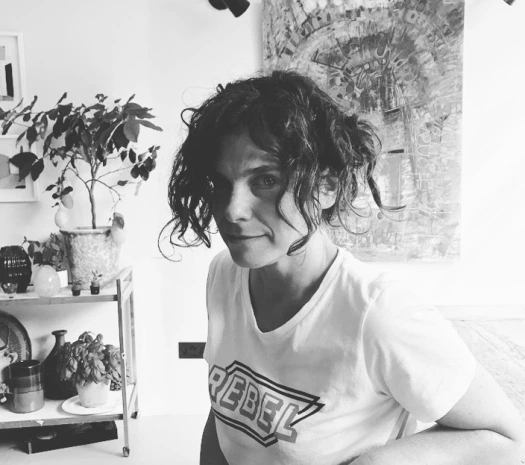
Tash Kahn
tashkahn.com
My practice is multi-faceted. It never used to be this way. I used to paint and still to this day say that if you peeled off my many layers you will find a painter (albeit tortured) at the heart. I moved away from the canvas slowly, first onto Perspex, then onto the wall itself. I traded in paint for gaffer tape. I liked the instant line.
Journeys to and from my studio were interrupted to collect other people’s rubbish (something I still do), which I used to create ‘wall sculptures’, held in place with tape. Those pieces only lasted as long as the tape would allow before falling down into something else. I researched entropy and watched my work gradually decline into its own disorder. Sometimes I recycled the trash into another piece; other times I binned it. I enjoyed the process of recycling and remaking. And liked that each piece could spawn countless others, negating the art object as a whole.
Now I use sculpture, Polaroids, installation, film and collage to document the history of everyday life by recording the debris of the present. I seek out other people’s rubbish and collect objects I am drawn to, ready to be archived or recycled into something else. But I am always mindful of having too much stuff. Now I try to make ephemeral work – work that is there for the length of a show or the duration of a project, then it is gone. I am constantly questioning why and how I do what I do. How can I engage the people that matter and use art as an agent for change?

john ros
johnros.com
i used to call myself a painter. i walked around with paint on my jeans and t-shirts. i used to think in paint — noting color, form and space — i still regularly mix colors in my head.
i have worked in restaurants and bars, bookshops and cafes, as a veterinary assistant, lifeguard and courier. i have also worked in galleries, museums and with public and private collections for the past twenty-two years in a variety of jobs.
i started noticing mounds of artwork in storage facilities and piles of wasted building and packaging materials from exhibitions. on top of an already heightened sense of capitalist consumption, i realized i needed to shift my studio practice into a more environmentally critical space.
my first installation was created in 2001, when i began working with space and material in a way that seemed to align with my emerging apprehensions about the environment. since then, installations of varying scale and material have slowly morphed from studio productions into site-responsive interventions, created on-site from materials found there.
my work involves getting to know the spaces i occupy, understanding the impact of my movements on the environment and on others, past, present and future. in some ways my practice has become a collaboration with many — known and unknown — as we encounter each other and build experiences together — figuratively and literally.
more and more in recent years, my studio practice has become my art object. ritualistic, observational and continuous. it’s not about object, but gesture. it‘s a cumulative action that involves many active parts and some inactive parts that coexist and influence each other.
i have a daily practice of reading, writing, researching, sketching and photo-taking. these are all forms of note-taking that will make themselves known in future gestures.
my focus is unrestrained and rigorous, trivial and urgent. this contradiction as a constant allows me to adapt and sustain this art, and this life.
 the bin
You must be logged in to post a comment.